 PawsanalityTake the quiz
Play · 90 · keen hunter-player
Your cat may enjoy regular prey-like play and safe food puzzles that let them stalk, chase, and solve.
Evidence base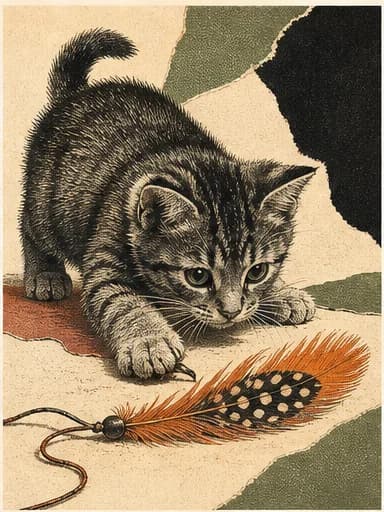
patient pounce specialist
Play has a purpose: stalk, wait, chase, repeat.
You may recognize the locked-on stare, the quiet wiggle, and the toy carried off like a serious prize.
Tiny Hunter is an interpretation label for a nearby seven-trait pattern—not a discovered type, a diagnosis, or a claim about how rare your cat is.
Play has a shape rather than a mood. Tiny Hunters tend to run a full sequence — locate, stalk, freeze, wiggle, pounce, carry off — and a game that skips to the end can leave them oddly unsatisfied. The stare that arrives before the pounce is often mistaken for zoning out; it is the working half of the behaviour.
Prey drive on this scale is usually paired with sharp attention to small movement, which means ankles, shoelaces, and anything trailing become plausible targets. Most of the intensity is time-of-day specific: dawn and dusk tend to concentrate it, and the rest of the day can look comparatively unremarkable.
The prototype pattern this archetype is matched against, on the same transparent 0–100 scales the quiz reports.
These are prototype values, not your cat’s scores. The quiz compares the traits it could actually score against all eight prototypes and reports the closest, plus the secondary streak underneath it.
The three traits that place this pattern furthest from the midpoint, and the evidence-informed suggestions attached to them.
Play · 90 · keen hunter-player
Your cat may enjoy regular prey-like play and safe food puzzles that let them stalk, chase, and solve.
Evidence baseExplore · 75 · active explorer
Your cat may enjoy climbing routes, new vantage points, and a small rotation of safe objects to investigate.
Evidence baseNovelty · 40 · ready to investigate
Your cat may enjoy safe, gradual novelty—try rotating one exploration object at a time while keeping an easy retreat available.
Evidence baseNone of this is veterinary or behavioural advice. Sudden changes in behaviour, or new pain during ordinary handling, are not personality traits and are worth raising with a vet.
The archetypes whose prototype scores sit closest to Tiny Hunter. Most cats sit somewhere between several of them.
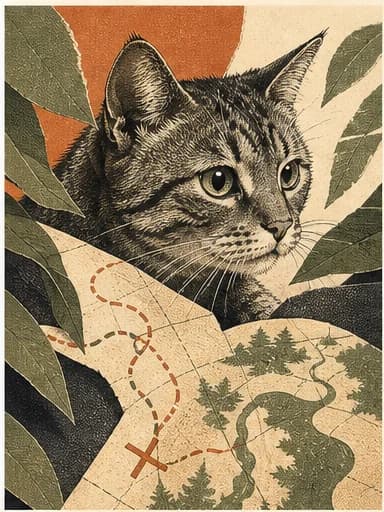
curious cartographer
Drawn to fresh routes, elevated lookouts, and small changes worth inspecting.
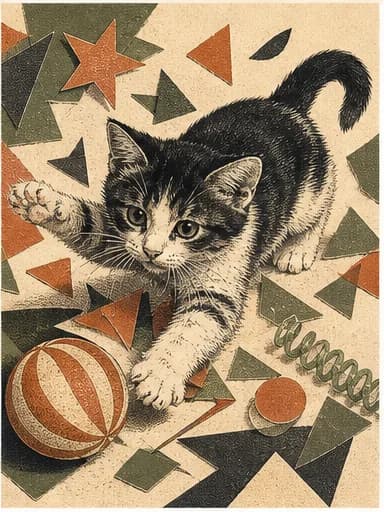
enthusiastic agent of surprise
Fast ideas, big play, and a talent for turning ordinary objects into events.
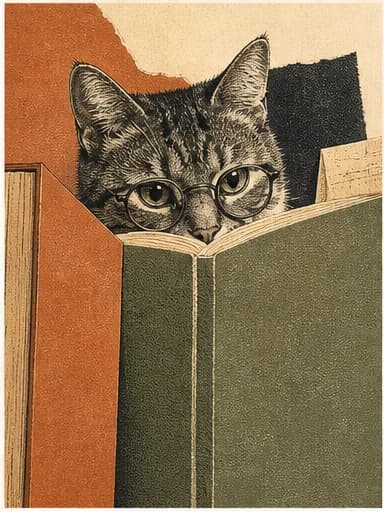
consider first, proceed second
Notices the details, takes time with change, and remembers how things usually work.
Reading about a pattern is not the same as measuring one. The quiz scores seven traits from behaviour you have actually observed, then finds the closest match.
Take the free cat quizSee all eight cat personality types or read the scoring methodology.