 PawsanalityTake the quiz
Explore · 85 · active explorer
Your cat may enjoy climbing routes, new vantage points, and a small rotation of safe objects to investigate.
Evidence base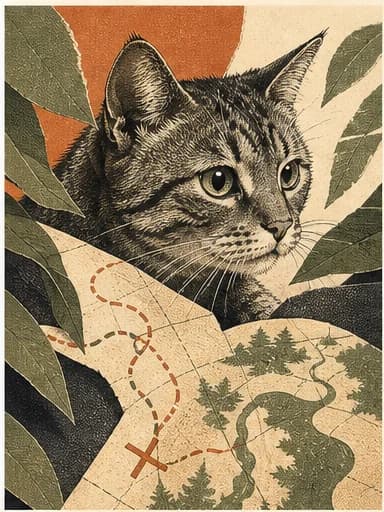
curious cartographer
Drawn to fresh routes, elevated lookouts, and small changes worth inspecting.
You may recognize the careful patrol, the cupboard audit, and the sudden need to inspect whatever just moved.
Explorer is an interpretation label for a nearby seven-trait pattern—not a discovered type, a diagnosis, or a claim about how rare your cat is.
The day tends to have a route. Explorer cats often work the same circuit — window, counter, top of the bookshelf, the gap behind the door — checking whether anything has shifted since the last pass. A delivery box left in the hall is not clutter to them; it is new information that has to be logged.
Because the drive is investigative rather than anxious, most Explorers approach change frontally: ears forward, body low but advancing, one deliberate paw. The interest burns bright and then resolves. Once a thing has been catalogued it stops being interesting, which is why a small rotation of ordinary objects usually holds attention better than an expensive toy left out permanently.
The prototype pattern this archetype is matched against, on the same transparent 0–100 scales the quiz reports.
These are prototype values, not your cat’s scores. The quiz compares the traits it could actually score against all eight prototypes and reports the closest, plus the secondary streak underneath it.
The three traits that place this pattern furthest from the midpoint, and the evidence-informed suggestions attached to them.
Explore · 85 · active explorer
Your cat may enjoy climbing routes, new vantage points, and a small rotation of safe objects to investigate.
Evidence baseNovelty · 25 · ready to investigate
Your cat may enjoy safe, gradual novelty—try rotating one exploration object at a time while keeping an easy retreat available.
Evidence basePlay · 75 · keen hunter-player
Your cat may enjoy regular prey-like play and safe food puzzles that let them stalk, chase, and solve.
Evidence baseNone of this is veterinary or behavioural advice. Sudden changes in behaviour, or new pain during ordinary handling, are not personality traits and are worth raising with a vet.
The archetypes whose prototype scores sit closest to Explorer. Most cats sit somewhere between several of them.
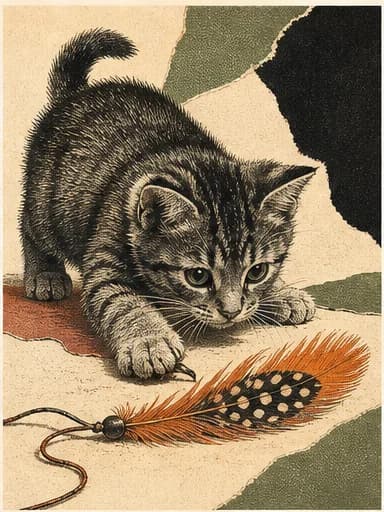
patient pounce specialist
Play has a purpose: stalk, wait, chase, repeat.
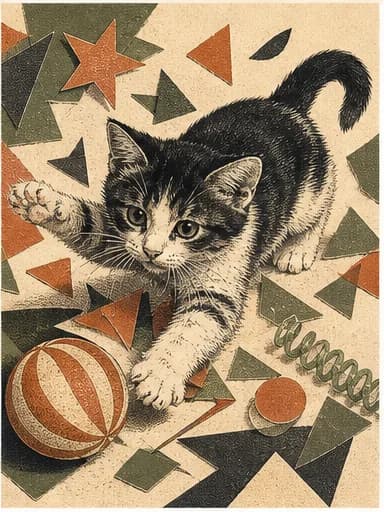
enthusiastic agent of surprise
Fast ideas, big play, and a talent for turning ordinary objects into events.
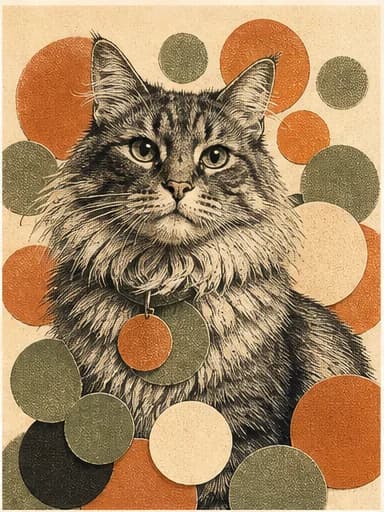
resident welcome committee
Often happiest when the household is together and there is friendly business to supervise.
Reading about a pattern is not the same as measuring one. The quiz scores seven traits from behaviour you have actually observed, then finds the closest match.
Take the free cat quizSee all eight cat personality types or read the scoring methodology.