 PawsanalityTake the quiz
People · 90 · people-oriented
Your cat may enjoy frequent, predictable moments of voluntary interaction woven into the day.
Evidence base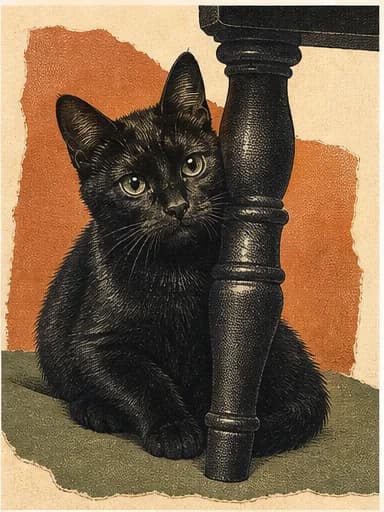
quietly devoted companion
Connection matters, usually on familiar terms and within reassuring range.
You may recognize the soft footfall behind you, the nearby nap, and the mysteriously occupied chair.
Shadow is an interpretation label for a nearby seven-trait pattern—not a discovered type, a diagnosis, or a claim about how rare your cat is.
Shadows tend to keep a person in range. They move rooms when you move, settle a metre away rather than on top of you, and reappear in the chair you have just left. The attachment is usually specific: one or two familiar people rather than the household in general, and often noticeably cooler toward visitors.
Activity tends to run low and comfort-oriented, so the day has fewer sprints and more relocation. Contact is often sought on their terms and in familiar contexts — the same chair, the same hour, the same side of the sofa — which is why disruptions to routine can read as sulking when they are closer to recalibration.
The prototype pattern this archetype is matched against, on the same transparent 0–100 scales the quiz reports.
These are prototype values, not your cat’s scores. The quiz compares the traits it could actually score against all eight prototypes and reports the closest, plus the secondary streak underneath it.
The three traits that place this pattern furthest from the midpoint, and the evidence-informed suggestions attached to them.
People · 90 · people-oriented
Your cat may enjoy frequent, predictable moments of voluntary interaction woven into the day.
Evidence baseCats · 35 · prefers more space
Your cat may enjoy more separated resources and distance; avoid forced proximity and make introductions gradual.
Evidence baseExplore · 40 · content with familiar ground
Your cat may enjoy short, low-pressure invitations to explore, with familiar resting places always available.
Evidence baseNone of this is veterinary or behavioural advice. Sudden changes in behaviour, or new pain during ordinary handling, are not personality traits and are worth raising with a vet.
The archetypes whose prototype scores sit closest to Shadow. Most cats sit somewhere between several of them.
keeper of the household timetable
Comfort grows from familiar rhythms, considerate service, and changes announced well in advance.
consider first, proceed second
Notices the details, takes time with change, and remembers how things usually work.
resident welcome committee
Often happiest when the household is together and there is friendly business to supervise.
Reading about a pattern is not the same as measuring one. The quiz scores seven traits from behaviour you have actually observed, then finds the closest match.
Take the free cat quizSee all eight cat personality types or read the scoring methodology.